
Sole proprietorship or limited company — which to choose
Comparing Polish sole proprietorship (JDG) and a limited company in 2026: costs, liability, taxation and Estonian CIT.
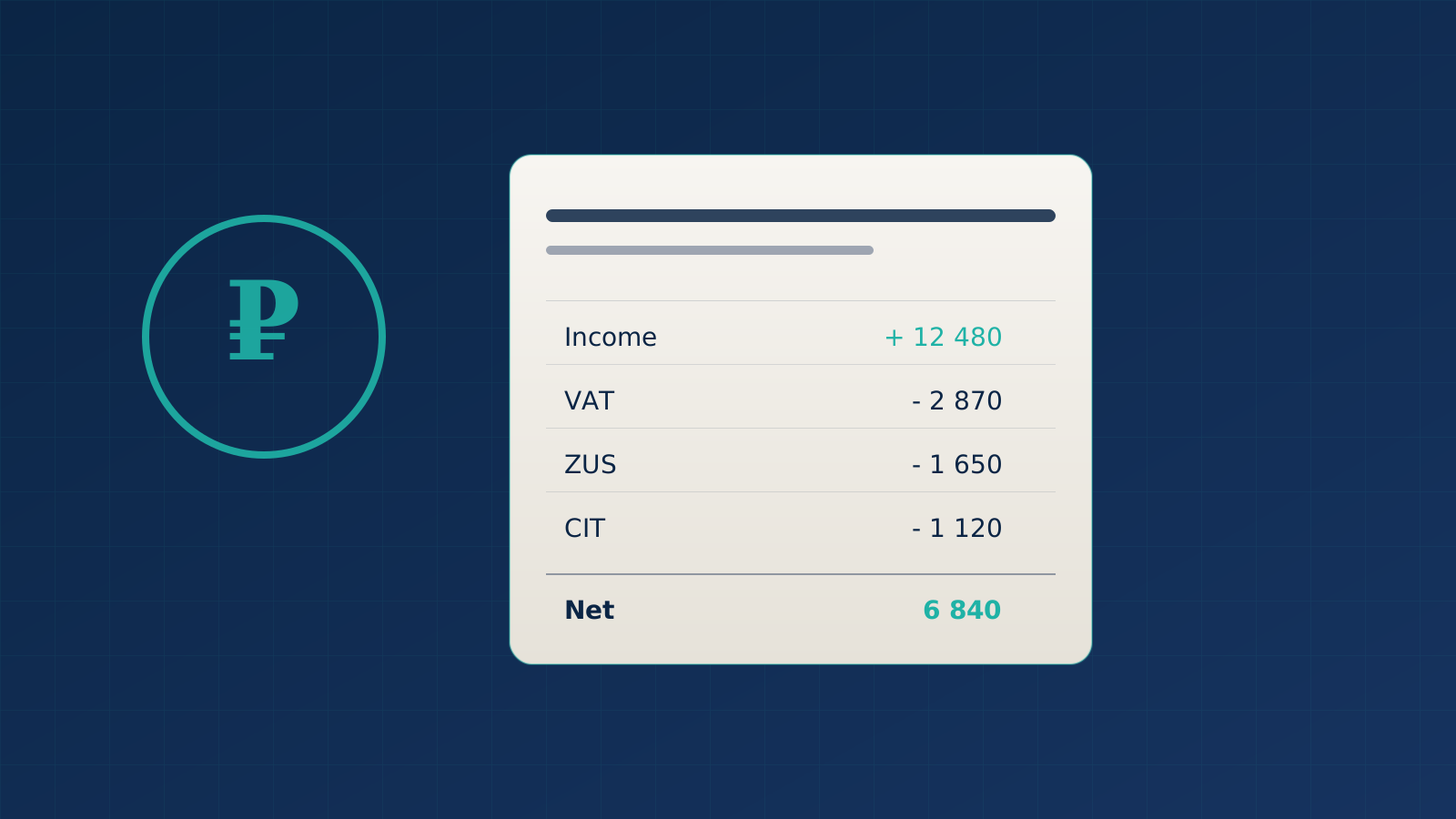
Choosing between a Polish sole proprietorship (JDG) and a limited liability company (sp. z o.o.) is one of the first strategic decisions for any entrepreneur in Poland. In 2026 both forms remain popular, but they differ significantly in running costs, scope of liability and taxation. The right choice depends on the scale of the business, the level of risk and your growth plans.
Key differences between JDG and sp. z o.o.
JDG is the simplest form of business — CEIDG registration takes minutes and accounting is usually limited to the KPiR, lump-sum (ryczałt) or tax card. The downside is full personal liability of the owner and mandatory ZUS contributions regardless of income, which can be a burden in months with lower sales.
A sp. z o.o. caps shareholder liability at the contributed capital, but adds cost — full accounting, financial statements and KRS filings. The classic model means double taxation: first CIT (9% or 19%), then 19% on dividends. An alternative is the Estonian CIT, which defers tax until profits are distributed and is worth considering when earnings are reinvested.
- JDG: fast CEIDG registration, simplified bookkeeping, ZUS independent of income.
- Sp. z o.o.: minimum share capital PLN 5,000, liability limited to company assets.
- Classic sp. z o.o.: CIT 9% or 19% plus 19% tax on distributed dividends.
- Estonian CIT: no current CIT, tax only when profits are paid out.
- Sp. z o.o.: full accounting and mandatory financial statement filed with KRS.
Rates and thresholds are updated annually; consult an accountant before making a decision.